Web portal
Elite Engage Employee Portal
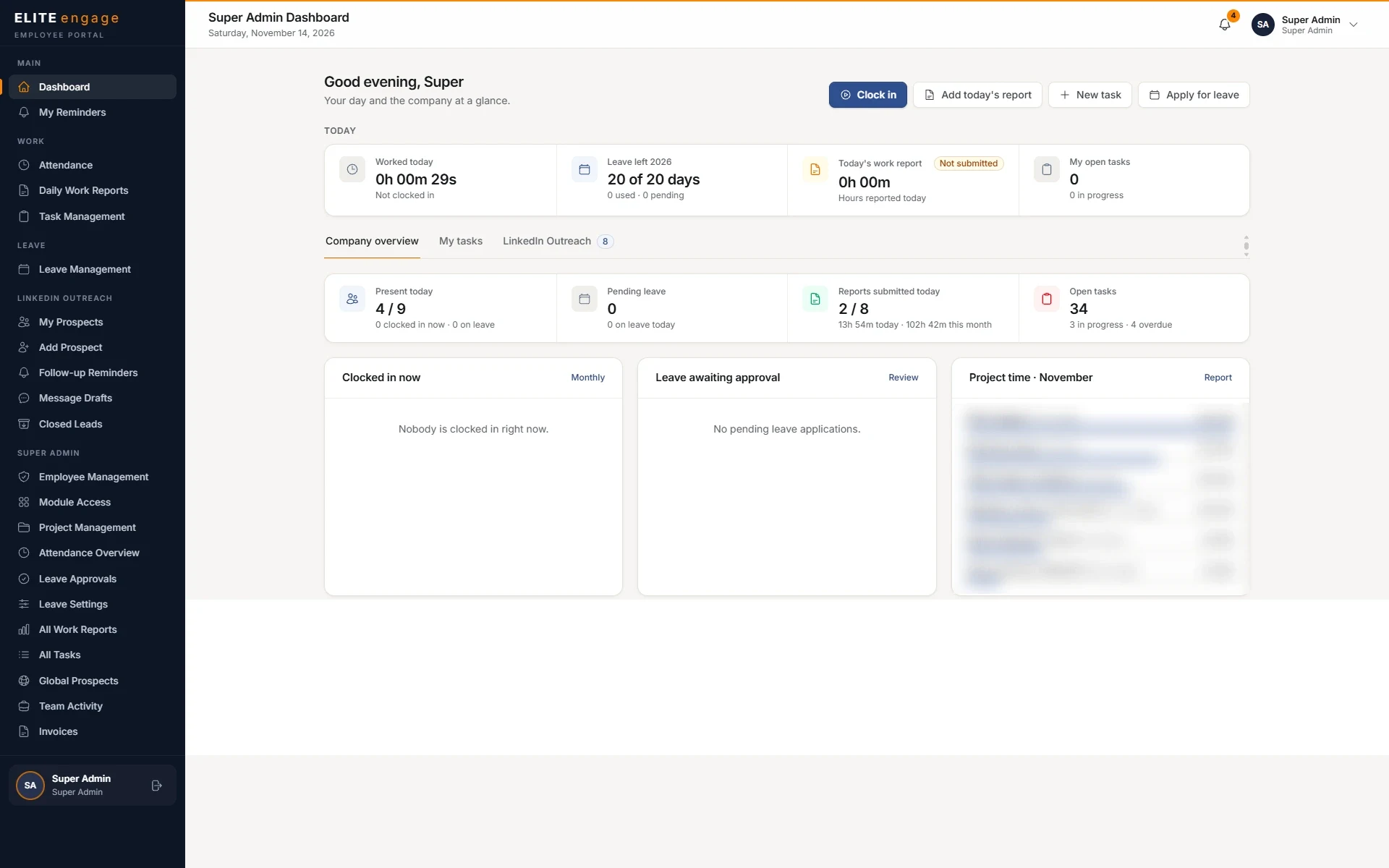
An internal portal for a growing team: attendance and leave, daily work reports, tasks and project time, plus a LinkedIn outreach tracker for prospects and follow-ups.
Service 03
We design and build web applications, customer portals and internal tools for the processes a website can’t handle, using Laravel, Node.js, React and Next.js.
Laravel · Node.js · React · Next.js
(01)Overview
Many businesses run important processes on spreadsheets, shared inboxes and several disconnected tools. It works until it doesn’t: details get retyped, nobody is sure which version is current, and customers wait for answers.
We build applications around the way your team actually works, so information is entered once, everyone sees the same status, and routine steps happen automatically. We start with what matters most, release early, and improve from real use.
What you can expect
Data entered in one place and available to everyone who needs it.
Routine steps, reminders and updates handled automatically.
Clean architecture and documentation, so the system can evolve.
(02)Problems we solve
These are the issues we hear most often before a project starts, and the ones this service is built to fix.
1Problem
Details are copied between sheets, inboxes and tools, and nobody is sure which version is right.
2Problem
Off-the-shelf tools force you to change how you work, or leave gaps your team fills by hand.
3Problem
Without a portal, every question about status, bookings or documents needs a call or an email.
(03)Technology
We choose the stack for what your application needs to do, and explain the choice in plain language before any code is written.
01
Our foundation for dependable back ends: user accounts, roles, data and business logic on a mature PHP framework.
02
For real-time features, lightweight APIs and integrations that handle many connections at once.
03
Interactive interfaces for dashboards and portals that feel quick and responsive.
04
React with server rendering, for fast customer-facing apps and portals that also need to be found in search.
(04)What’s included
Discovery01
Build02
Run03
(05)How it works
You always know what stage we’re at, what you’ll receive next, and what we need from you.
01
We learn how your business works, who your customers are and what needs to change, before proposing anything.
02
Structure, platform and design direction agreed in writing, with a clear scope and estimate.
03
Development in stages you can review, with speed, accessibility and maintainability built in.
04
Careful testing and launch, training for your team, then support and improvements as you need them.
(06)Related work
Web portal
An internal portal for a growing team: attendance and leave, daily work reports, tasks and project time, plus a LinkedIn outreach tracker for prospects and follow-ups.
Web portal
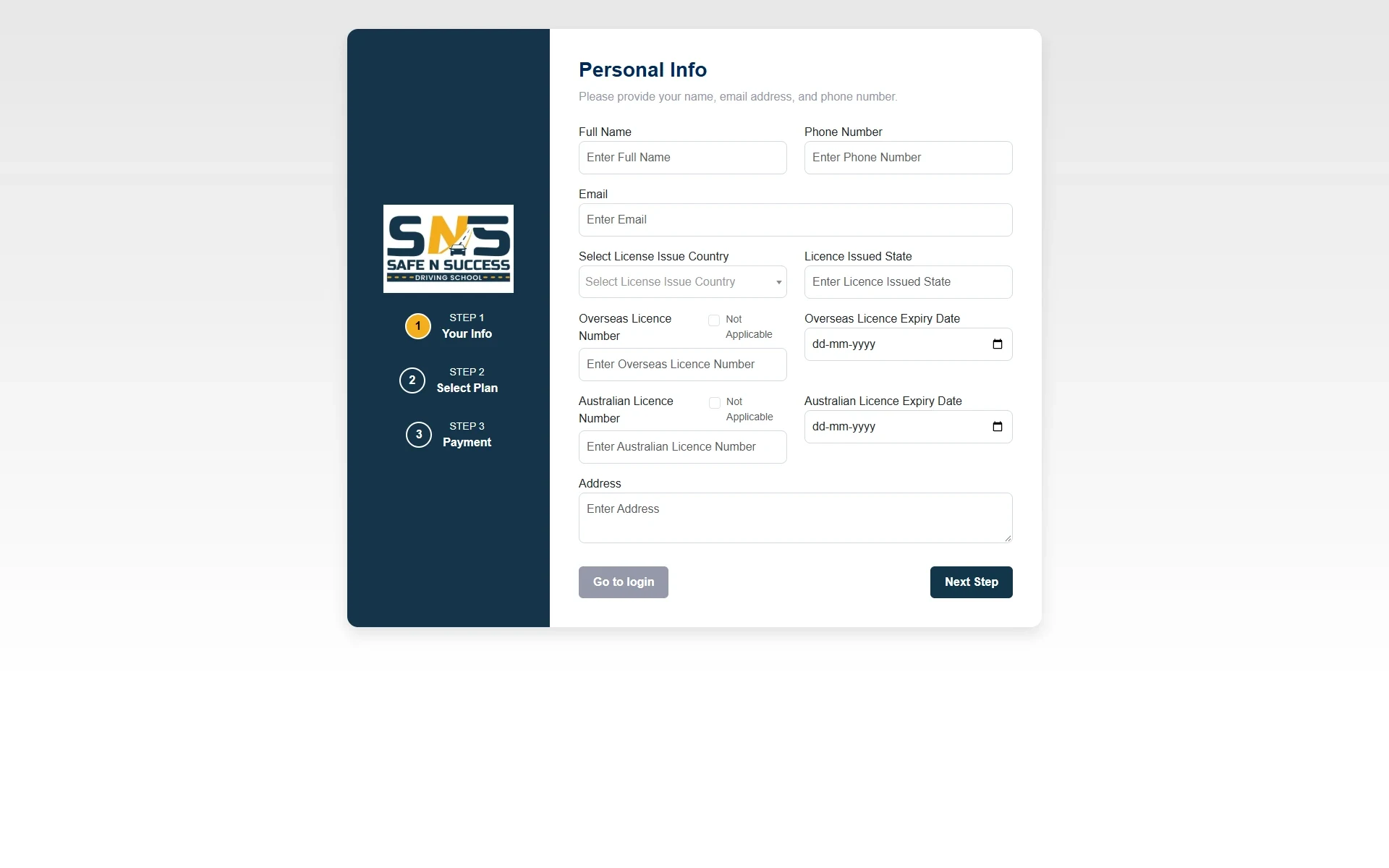
An online booking system for the same driving school. Learners register and book lesson packages in three steps; admins manage the calendar, instructors, suburbs, courses, payments and licence-expiry reminders.
Customer and partner portals, admin dashboards, booking and scheduling systems, CRM tools, and integrations that connect your website, forms and existing software.
By what the application needs. Laravel is our usual choice for data-heavy back ends, Node.js for real-time features and integrations, and React or Next.js for the interface. We explain the choice in the written scope.
In most cases, yes, through the other system’s API or data exports. We check what’s possible during discovery, before anything is promised.
No. We write clean, documented code with standard tools, so another developer could pick it up. Avoiding lock-in is part of how we build.
Often, yes. We review the code first and give you an honest assessment of whether to improve it or rebuild parts of it.